PLEASE GRAB A CHROMIE
OPENING QUESTION:
A particle of mass m starts from rest at position x = 0.0 meters and time = 0.0 sec and moves under the influence of a single force
Fx = bt
where b is a constant. The velocity v is found to be:
-
bt/m
-
bt2/2m
-
bt2/m
-
(b(t)1/2)/m
-
b/mt
-
p = mv
-
J = F∆t = ∆mv = ∆p
-
∫Fdt = ∆p
-
∑F = dp/dt
-
m1v1i + m2v2i = m1v1f + m2v2f
-
momentum (p)
impulse (J): "A measure of the degree to which an external force changes the particle's momentum". Note: Our book uses the term (I) to denote impulse, but that's not standard since (I) usually stands for the moment of Inertia (as we'll see in the next chapter). The AP Equation Sheet uses J to denote impulse.
conservation of linear momentum
-
Newton's 2nd Revised: ∑F = dP/dt (the sum of the forces acting on a particle (or system) is equal to the change in momentum with respect to the time in which those forces acted)
-
elastic collisions: Objects collide and then separate -- kinetic energy and momentum are BOTH conserved
-
perfectly inelastic collisions: Objects collide and then stick together -- momentum IS conserved but kinetic energy is not
-
inelastic collisions: Objects collide but do not stick together -- momentum IS conserved but kinetic energy is not
Imagine you have two glass marbles moving along a frictionless playing surface. How would you rewrite this question to ensure that your students processed this as an elastic collision?
-
(new person) You are attempting to be a gracious AND humble instructor, what further change would make so that your students can process this problem (for example: finding the resulting velocity of the 2nd particle) in a way that makes sense, but NOT get bogged down in a great deal of trig?
-
(new person) please rewrite this problem using appropriate masses and velocities and have your students find for.... <?-- your choice>. NOTICE: the author WAITS until the very, very end (as he usually does), to substitute numbers for variables.... make SURE you do the same.
-
(new person) How would you redesign the problem so it was obviously perfectly inelastic? (now let's DO THAT)
-
(new person) You've just designed a momentum problem where two objects collide, bounce apart and then go on their merry ways. What additional information would you need to provide your students so they process this problem as an *inelastic* collision?
-
We are NOT going to practice collisions in 2 dimensions... why not?
FORMULAE OBJECTUS:
CALENDAR:
NOTE: Calendar Update
WORDS O' THE DAY:
═══════════════════════════
WORK O' THE DAY:
BOO! (and no, not like in the Halloween Boo!, more like poor performance boo!) Apparently nobody took a gander at our labs over the weekend.
To wit... I have gone ahead an purchased connectors that may (or may not) allow us to string cables together.
I've also purchased a wireless acceleratometer and a wireless motion detector. Those may (or may not) be approved and arrive by next week (then again they may not).
I spoke with the vendor and we may be able to jury rig our own connections using speaker wire I have at home (by "we", I, of course, mean *you*)
Let's get someone up to the board:
═══════════════════════════
Elastic collision short cut (courtesy of Khan Academy). I think Johnson jokingly refers to this as the conservation of linear velocity... BE CAREFUL when and how you use it
Do worked example 9.5 on page 261
Skim through the example 9.9 on page 266 to see why we are skipping 2 dimensional collisions.
Advanced math jockeys: You might want to take a gander at example 9.12 and example 9.17 in the next few days
Classwork:
On page 284-85
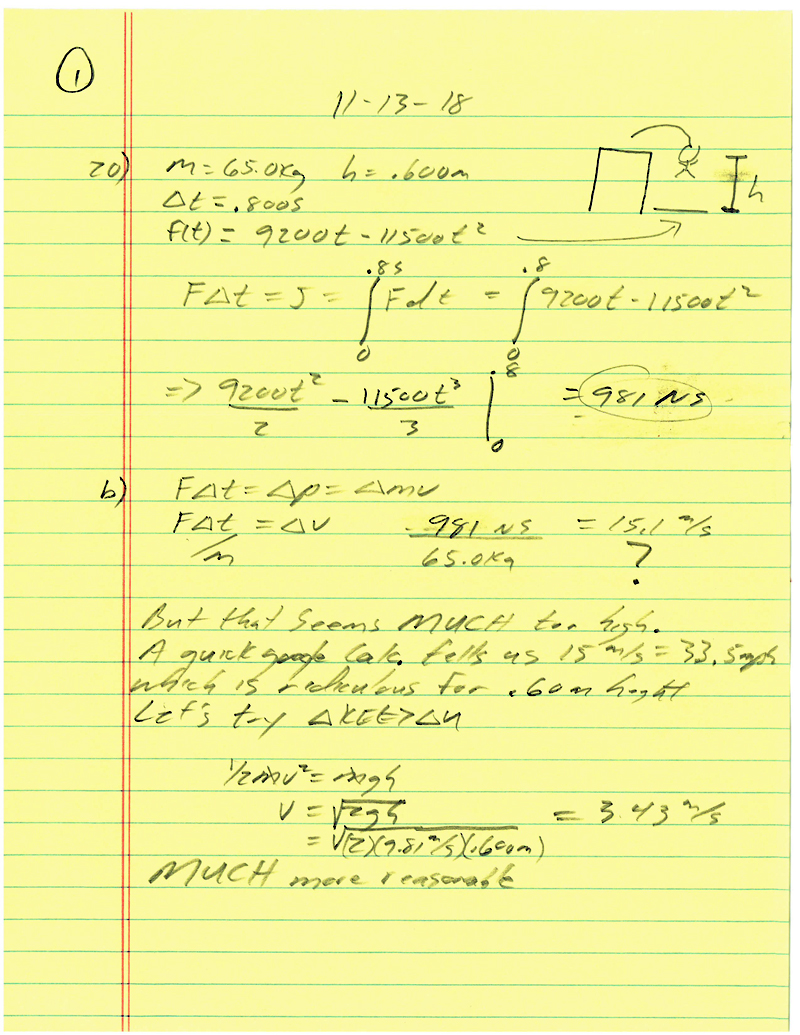
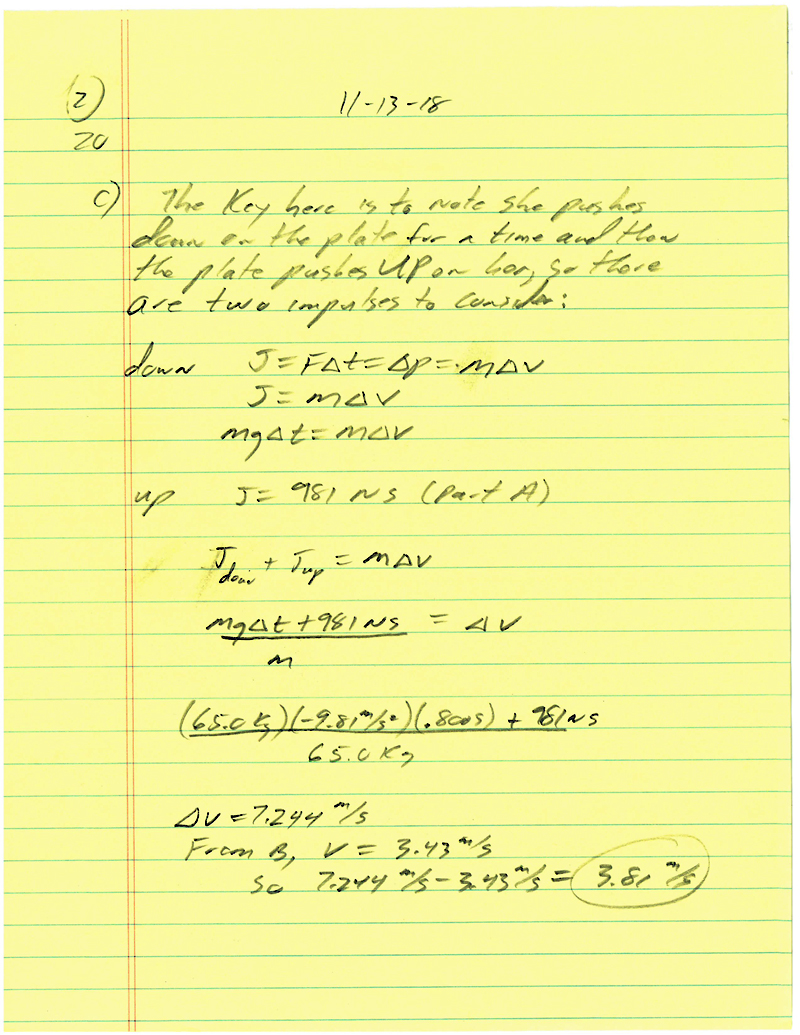
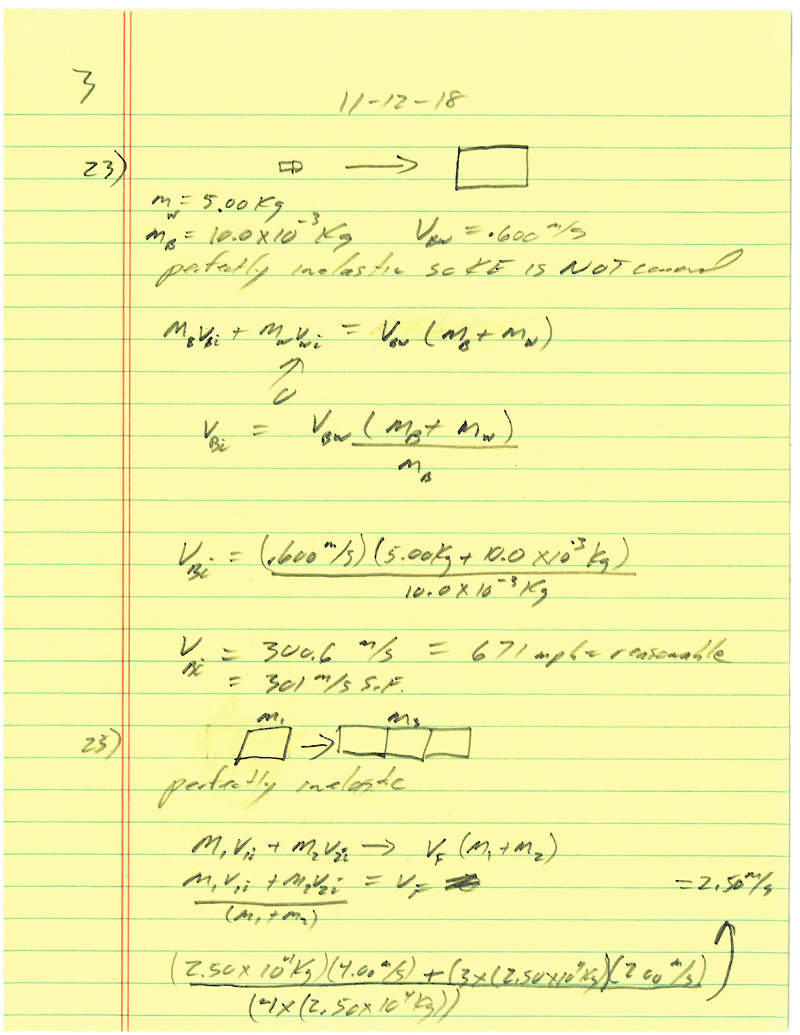
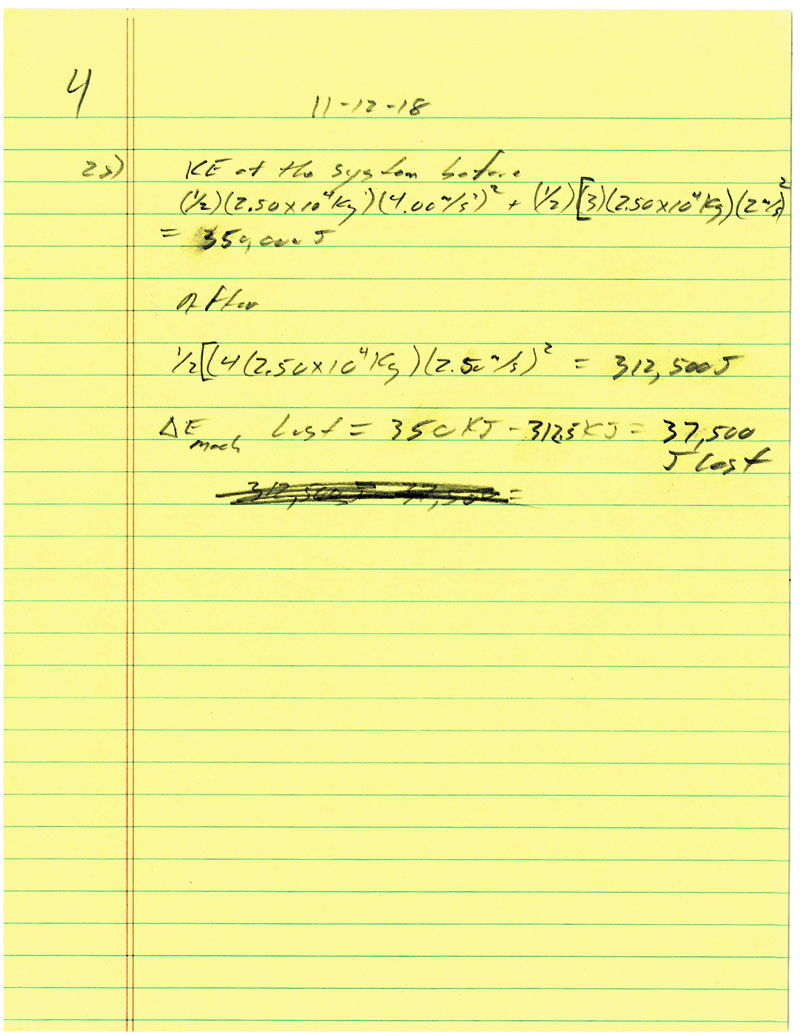
Do review problem 20 (there are some odd bits here... roll with 'em and concentrate on what you can learn from the problem), 23, 25, 27